Wednesday, September 12, 2007

Spooky News & Links

In its review of Tantalize (Candlewick, 2007), the International Reading Association's Journal of Adolescent and Adult Literacy writes: "Tantalize is a thinking reader's horror novel and an entertaining, empowering ride."

Read the whole two-plus-page extensive review (PDF file); scroll to pages 81 to 84 (pg. 7 to 10 of the file) for a Q&A author interview with me about the writing of Tantalize.

Reviews featured in this file also include Vampire Loves by Joann Sfar (First Second, 2006); The Wednesday Wars by Gary D. Schmidt (Clarion, 2007); How Ya Like Me Now by Brendan Halpin (FSG, 2007) and New Moon by Stephenie Meyer (Little Brown, 2006)(author interview).

Attention Austinites: look for the page 1 story on the writing of Tantalize in the West Austin News.

The September giveaways at the Tantalize Fans Unite! group at MySpace will be Peeps (Razorbill, 2005), Pretties (Simon & Schuster, 2005)(excerpt), and Uglies (Simon & Schuster, 2001)(excerpt) by Scott Westerfeld. Scott's latest release is Extras (Simon & Schuster, 2007). Read a Q&A interview with Scott about Extras from Simon & Schuster. Read a Cynsations interview with Scott.

Monday, September 10, 2007

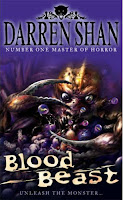
Author Feature: Darren Shan

Could you tell us about your path to publication? Any sprints or stumbles along the way?

I started out writing books for adults, and published my first in the UK a year before Cirque Du Freak (February 1999). I'd been writing a lot since I was 16, 17, but started writing full-time when I was 23. I didn't make any money for a number of years, and then only very little money for a few more after that, but luckily I had very supportive parents who let me live at home with them.

I found an agent (Christopher Little) quite quickly after I started to write full-time, but it took longer to find a publisher.

When I sent Cirque Du Freak to him, he was very excited, but publishers were more wary--20 turned it down before HarperCollins in the UK took a chance on it! It took them nearly two and a half years to publish it (mainly because of an editorial change), and during that time their enthusiasm in-house grew, as it was passed around and read by people in different departments. Then, shortly before its release, Warner Brothers optioned the movie rights, which meant it exploded onto the scene on a wave of publicity which definitely helped get it noticed in the early days.

I've been very lucky--in children's books, it's hard to get noticed quickly, so authors normally have to plug away for many years, gradually building up their audience. I managed to make the breakthrough quite swiftly, so ever since Cirque was published, I haven't had to struggle the way many children's authors have to--I've been able to afford to write full-time.

The first of your books that I read was Cirque du Freak: A Living Nightmare, Book 1 in the Darren Shan Saga (Little Brown, 2001). There are eleven more in the series. Could you tell us about them?

The 12 book Cirque Du Freak series is about a boy called Darren Shan who becomes a vampire's assistant. My vampires are very different to the traditional stereotypes--they're not evil, they don't kill, they don't have fangs, they don't live forever. The stories explore Darren's life in the world of vampires, the struggles he faces to adapt to his new circumstances, the adventures he gets swept into.

Although it's published as a horror series, I think it's an adventure series more than anything else, which is why it appeals to such a wide range of readers, not just those who like horror. It has a strong horror edge in many books, yes, but also fantasy, science fiction and mystery elements.

Predominantly, though, it's about adventure. It also focuses strongly on family and friendship, and what happens when you lose people close to you, or are betrayed by someone you thought of as a friend. That's why I get far more letters and emails from readers saying they're cried reading my books than saying they've had nightmares!

What inspired you to create these books?

I just write books that I'd like to read. With Cirque Du Freak, I tried to remember what I was like when I was 12, 13, 14 years old, the books and movies I enjoyed. Then I wrote a books which would hopefully include the best of everything that I liked, which the teenage me would have loved to read. I never write a book for an audience or to fill a market niche. I just tell stories which interest me, then hope to hell that other people are interested in them too!

What was the timeline between initial spark and publication, and what were the major events along the way?

I started writing the book a few days after having my initial idea. The first draft took 6 weeks to complete. My agent liked it and sent it out to 20 publishers, all of whom turned it down! Because it was different to everything else that was being published, and because it was so dark and not aimed at a specific age group of children, publishers were wary of it.

Then HarperCollins decided to publish it. It was meant to be published within 18 months, but because my editor left several months later, that got delayed. At the time that was very frustrating, of course, but instead of moping about it, I used that time to forge ahead with the series, to the extent that by the time the first book was published, I'd already written the first draft of book 8!

I release my books very quickly--at least 2 a year--but I spent an average of 2-3 years writing them, working on the editing process. That delay at the start of my career has meant I've always been way ahead of my publication schedule and have never had to worry about a deadline, so, looking back, I'd have to say that was the best thing that could have possibly happened to me!

What were the challenges (literary, research, psychological, and logistical) in bringing the series to life?

The hardest part was letting the characters develop and change, without developing and changing so much that I started to lose the readers I'd attracted in the first place. The story of Cirque Du Freak spans almost 30 years. Darren only ages physically by 4 or 5 years during that time (because he's a vampire), but obviously mentally he undergoes many more changes. I wanted to show this change, but not have him age so much that children could no longer identify with him. It was a delicate juggling act which I think I just about pulled off!

You followed up this success by launching The Demonata series (Little Brown, 2005-). Could you describe these books?

"The Demonata" is a 10 book series about demons. It's very different than Cirque Du Freak in that there are three narrators, living in different time periods, who take it in turn to tell part of the overall story.

The first half of the series consists of stand-alone story arcs, and the characters and stories don't seem to be particularly connected. But everything comes together at the midway point (books 5 and 6) and the story power straight ahead from there. It was risky, writing a series that for a long time seems to be just a collection of randomly connected story ideas and characters, but I hoped my fans would trust me to pull everything together and create order out of chaos, and luckily most of them have! The books are somewhat bloodier than my vampire books, and I would describe this as a horror series, but the focus of family and friendship remains the same.

In terms of your writing process, did you go about framing this series any differently than the first one? If so, how?

It was very different. Cirque Du Freak was an ongoing storyline, with one main characters, so it was simply a case of me asking myself, 'What happens next?' The story had a natural rhythm and flow, and I simply had to decide what I wanted to add to the mix on a book-by-book basis.

"The Demonata" began life as a series of free-standing stories. I wrote the early books out of order, with no sense of assembling them into a carefully structured series. Because I was so far ahead of publication schedule, I had lots of time to play around with things. I didn't need to present my ideas to my publishers for a few years (I wrote the first draft of Lord Loss way back in 2001!), so I just experimented and went wherever the stories led me.

Fortunately, as I was working on the books, I had more ideas and started to see ways to link them up and mold them into something far more complex and interlinked than I'd originally intended. Through lots of re-writes and editing, The Demonata as we know it finally came together. But in the beginning there was no grand plan--indeed, no plan at all!

What about the children's book audience appeals to you?

Their enthusiasm. If a kid or teenager likes something, they really get excited about it and don't seek to contain that excitement. Adults are more reserved and will tell you politely how much they like your work. That's very nice, but as a big kid myself, I much prefer the open gasps and exclamations of my younger readers!

If you could go back and talk to yourself when you were beginning writer, what advice would you offer?

The advice that others writers gave in interviews that I read--write! There are no shortcuts. The more you write, the more you learn and the better you get.

Like most young writers, I hoped there was some sort of trick to it, that I could just be inspired by some magical force, then write the books in a whirlwind daze.

Luckily, I realized quickly that good writing is the result of hard work, so I knuckled down and threw myself into it.

It's frustrating when you're starting out, not being able to write the way you'd like to, not being able to do justice to the stories you have inside your head, having to learn through a process of trail and error, having to write lots of bad stories before you learn to write good ones. But if you accept the need to work hard, and put in the hard work, that struggle and learning curve is what makes everything worthwhile.

I think you can only truly enjoy success if you've had to work for it. If you had a muse and writing came easy, then what would you have done that you could be proud of? A muse could speak through anyone--if the words aren't yours, you can't take credit for them.

What would you say specifically on the topic of writing horror?

It's fun!

How about on writing a book series?

It's hard work, but intriguing and stimulating. It's fascinating taking a group of characters on a long, multi-book journey. You get to do things you hadn't planned, go places with them that you never imagined.

I don't think a writer should force a book series--with both Cirque Du Freak: A Living Nightmare and Lord Loss, I had no intention of writing a long series. Each was intended as a one-off book. But if characters grow on you, and you find yourself wondering what happens next with them, then you shouldn't be afraid to take them forward and write a follow-up.

A good story will always suck you in and force you to write it, and you shouldn't shy away from that just because you know some people will accuse you of cashing in and taking the easy option.

Gothic fantasy/horror is so popular with young readers. What do you think it at the heart of the appeal?

We've explored most of this world and it's hard to get really excited about most things now, since we know so much and have seen so much of this planet. But the darkness and the mysteries it holds...they're as enticing and unexplained as ever. People have always been drawn to the unknown and the unknowable, and I think they always will be.

What do you do when you're not writing?

I like to read. I watch lots of movies and TV shows (but only on DVD--I almost never watch a show when it's first airing--I prefer to wait, then watch all the episodes in a short span of time). I enjoy going to art galleries. I like to travel. I go to soccer matches in the UK.

How do you balance your life as a writer with the responsibilities (speaking, promotion, etc.) of being an author?

It's difficult. Success brings a whole new set of problems--fan mail to respond to, a web site to maintain, tours to promote your work, interviews.

When you're as prolific as I am, and published in so many countries, the problems are amplified. Some writers choose to bypass those problems--they only tour rarely, they hire someone to reply to fan mail or just ignore it, they don't give interviews, they ignore the web or leave the running of their site in the hands of others.

I prefer to meet the problems head-on--I tour every year, I've been all around the world promoting my books, I'm always happy to give an interview, I run my web site myself, I reply personally to every letter that I receive. And I fit my work in around all that. It's easy enough to do as long as you're focused and make the most of your time.

I probably won't always be able to keep so many balls up in the air at the same time, but for as long as I have the energy, I like fitting so much in.

My favorite ever quote was by film director Cecil B. DeMille's brother, who said, 'The problem with Cecil is he bites off more than he can chew--but then proceeds to chew it!'

I like setting the bar high and having a running at it. Life's easier if you settle for the things you can comfortably manage--but where's the fun in that?!?

What can your fans look forward to next?

The rest of The Demonata series (10 books, coming out every April and October). Then...something else! I'm already hard at work on my next project, but I can't talk about it yet.

All I'll say is, there's still a lot more to come. I'm nowhere near to easing up yet!

Thursday, September 06, 2007

Fantasy Genre Web-based Seminar: Learn How to Tame Dragons, Negotiate with Wizards and Attract More Kids and Teens to the Library

From Jeanette Larson (author interview)(recommendation) and Raab Associates:

The fantasy genre captivates people of all ages, especially children and teens. Whether you're a devoted fantasy reader or wish you knew more about the genre, get the inside scoop on fantasy in our culture by joining us on Sept. 28, when the Authors as Experts Web Seminar Series presents "A Practical Guide to Fantasy" with Nina Hess. Author of A Practical Guide to Monsters (Mirrorstone, 2007), Hess is an experienced guide to this literary world. She will teach participants how to keep monsters at bay, tame dragons and negotiate with wizards.

Hess is also a senior editor at Mirrorstone Books, a company that is totally immersed in the genre. In this Web-based seminar, Hess will discuss the popularity of fantasy for all kids and its value in encouraging reluctant readers--particularly boys, to feel at home in the library. She will also talk about incorporating role-playing, costume parties, and fantasy script-writing into library programs for children and teens.

These one-hour web seminars provide continuing education courses for public and school librarians. They can also be adapted for teacher groups upon request.

Seminar Details At-A-Glance

Seminar: A Practical Guide to Fantasy

Date: September 28, 2007

Time: 11 a.m. Eastern Time [10 a.m. CT, 9 a.m. MT, 8 a.m. PT]

Format: This is a Web-based seminar. Registered participants will receive participation instructions, log-on information and a toll-free number to dial in for the audio portion of the seminar upon payment of the registration fee. Seminars run for one hour.

Cost: $50 per person

Discounts are available for group registration. To Register: send name and contact information to: info@raabassociates.com. You may either email or call in your credit card information at 914-241-2117.

About the Authors as Experts Web Seminar Series

This Web Seminar is part of a series of programs produced by Raab Associates Inc., marketing consultants specializing in children's books, in cooperation with Library Services Consultant Jeanette Larson, the former Youth Services Manager at Austin Public Library.

Tuesday, September 04, 2007

Spooky News & Links

Children's and Young Adult Author Sheri Sinykin: official author site features first chapter of current book, biography, bibliography, author visit information, teacher guides, peer editing guide, links, etc. Sinykin launches a "second writing career after a lengthy period of writer's block" with Giving Up The Ghost (Peachtree, 2007)(excerpt)(teacher's guide) and her first picture book, Zayde Comes to Live (Peachtree, TBA). She was lead author of the Magic Attic Club series and the author of nine other books for young readers in the 1990s.

Cherry Books is a new independent bookstore in in Thibodaux, Louisiana.

Guerilla Marketing and Other Secrets of the Trade: Book Marketing for Independent Publishers by Jessica Powers from NewPages. Jessica is the author of The Confessional (Knopf, 2007).

August 2007 reviews at TeensReadToo include: Blood Brothers by S.A. Harazin (Delacorte, 2007); The Confessional by J.L. Powers (Knopf, 2007); Daemon Hall by Andrew Nance (Henry Holt, 2007)(author interview); Head Case by Sarah Aronson (Roaring Brook, 2007); and Scary Beautiful by Niki Burnham (Simon Pulse, 2007)(author interview). In addition, this month's giveaways include two copies of my novel, Tantalize (Candlewick, 2007). See the complete list.

Has a Mythical Beast Turned Up in Texas? Texas Town Abuzz Over Reports That Mythical, Bloodsucking 'Chupacabras' Are in Their Midst from ABC News. Source: Hit Those Keys.

Author Brian Yansky will be signing Wonders of the World (Flux, 2007)(author interview) at the Barnes & Noble Round Rock at 2 p.m. Sept. 15.

More Personally

Listening Library/Random House has purchased audio rights to Tantalize. I'll keep you posted on the release date and reader.

The Candlewick Press website debuts audio of a brief reading by me of Tantalize as well as additional thoughts on the novel. Click here and see the sidebar.

I look forward to presenting both this novel and my recent picture book, Santa Knows, co-authored by Greg Leitich Smith, illustrated by Steve Bjorkman (Dutton, 2006), at the upcoming Kansas Book Festival in Wichita Oct. 5 and Oct. 6. Featured authors also include: J.B. Cheaney (author interview); L.D. Harkrader (author inteview); Kimberly Willis Holt (author interview); Greg Leitich Smith (author interview); and Dian Curtis Regan (author interview). Note: I am a fellow of the Kansas Center for the Book.

Love and best wishes to my husband and sometimes co-author, Greg Leitich Smith, as today is our 13th wedding anniversary!

Friday, August 31, 2007

Spooky News & Links

Reminder: I'm a 31 Flavorite author for October! I'll be chatting Oct. 29 at the readergirlz MySpace group forum about Tantalize (Candlewick, 2007). To participate, friend the readergirlz site, and their group forum; we are celebrating YALSA's Teen Read Week. Read a Cynsations interview with the Readergirlz Divas. Here's the schedule:

Week One
1. Meg Cabot
2. Tiffany Trent
3. Brent Hartinger (author interview)
4. Lorie Ann Grover (author interview)
5. K.L. Going (author interview)
6. Nikki Grimes

Week Two
7. Ellen Hopkins
8. Justina Chen Headley (author interview)
9. Chris Crutcher
10. Ann Brashares
11. Sarah Mlynowski
12. Cecil Castellucci (author interview)
13. Kirby Larson

Week Three

14. Tanya Lee Stone (author interview)
15. John Green (author interview)
16. Sara Zarr (author interview)
17. Deb Caletti
18. Rachel Cohn
19. Kirsten Miller
20. Mitali Perkins

Week Four
21. Sonya Sones
22. Lisa Yee (author interview)
23. Carolyn Mackler
24. E. Lockhart (author interview)
25. Janet Lee Carey (author interview)
26. Gaby Triana
27. Lauren Myracle (author interview)

Week Five
28. Holly Black (author interview)
29. Cynthia Leitich Smith (author interview)
30. Dia Calhoun (author interview)
31. Stephenie Meyer (author interview)

Attention Texas College Students! Enter the Writers' League of Texas annual College Horror Story Contest for the chance to win $200 and publication. The entry fee is five dollars per submission plus League membership ($15 for students). Deadline: Oct. 31. See details, guidelines, and entry form. Note: "Entry form may be printed and must be included with submission."

YA Author/Title List: A Few Names and Titles to Get You Going by Mechele R. Dillard at Suite101.com.

More Personally

Reminder: If you would like a signed Tantalize (Candlewick, 2007) bookmark and/or a bookplate for any of my titles, please feel free to write me with a snail/street address. If you are underage, you may send a parent's/guardian's work street address. Check with them first.

Monday, August 27, 2007

Author Interview: A.M. Jenkins on Beating Heart and Repossessed

A.M. Jenkins on A.M. Jenkins: "I live in Benbrook, Texas with my three sons. Novels: Breaking Boxes (Delacorte, 1997); Damage (HarperCollins, 2001); Out of Order (HarperCollins, 2003), Beating Heart (HarperCollins, 2006); Repossessed (HarperCollins, 2007); Night Road (HarperCollins, spring 2008). I also do freelance work for educational and trade companies; I'm currently working with Tiffany Trent on a fun project called Queen of the Masquerade, a book in the Hallowmere series (Mirrorstone, August 2008)."

Could you tell us about your path to publication? Any sprints or stumbles along the way?

I'm wary of speaking about publication in a way that encourages treating it as a writing goal. Personal goal, yes, but it's not like once you're published you've got it made and can relax and enjoy the rarefied air whilst dishing out advice to the great unwashed. Plus, the publication "path" is seldom straightforward. It usually doubles back on itself, forks off in different directions, or comes to a grinding halt in the middle of nowhere. IMHO, writing is about moving forward, and the real path for beginning and experienced writers alike is one of learning, stretching, and improving what's on the page.

With that in mind, my answer is:

Stumbles: rejection, rejection, rejection. Always rejection.

Sprints: Delacorte Press Prize for a First Young Adult Novel, California Young Reader Medal, L.A. Times Book of the Year Finalist, ALA Top Ten Best Books, Booklist Editor's Choice, BCCB Blue Ribbon Books, BBYA, Quick Picks, PEN/Phyllis Naylor Working Writer Fellowship.

Congratulations on your recent releases--Beating Heart: A Ghost Story (HarperCollins, 2006) and Repossessed (HarperCollins, 2007)! Let's start with Beating Heart. Could you fill us in on the story?

Beating Heart is the story of a dead girl and a living guy. She thinks he's hot, but also believes he's the one who killed her. He has his own problems, romantic and otherwise, and now he's also unwittingly being stalked by a ghost.

What was your initial inspiration for writing Beating Heart?

Some years ago there were a couple of movies that came out fairly close together, both with dead main characters who didn't know they were dead. (and the audience didn't know either, till the end). I thought about that dead MC scenario a lot, about how it would be difficult to do that in a novel because you usually use physical details to ground the scenes and to provide info about the emotional aspects of the story. The fact that I was too short-sighted to see a way to do this made me want to figure out a way to do it.

What were the challenges (literary, research, psychological, and logistical) in bringing it to life?

For me, the first hurdle was getting past the idea of grounding scenes in the traditional sense--after all, if the point-of-view character has no physical body there is no concrete scene to set. The second hurdle was getting the story to move along, when its MC (main character) had no sense of the passage of time, no dialog, no interaction with anyone or anything. She also was an unreliable narrator, to the point where the reader would have no clue what was going on. It was clear fairly quickly that the story would need to be nailed down somehow in order to be more than a collection of wispy impressions.

Your use of alternating point of view in prose and poetry was brilliant! Could you talk about this decision?

It was purely trial and error. Once I decided that the story had to be nailed down in order to work, I tried adding in a second point-of-view character in real time.

I thought at first that alternating the dead girl's "floaty" voice with more traditional prose sections would be too jarring, so I went through a phase where I tried the manuscript out as half-graphic novel (real-time guy), half "free verse" (dead girl).

From there I eventually came to see that the real-time parts might work if I could take my graphic novel script and turn it into a flat-voiced, removed, third-person prose that didn't compete with the dead girl's sections, which were as evocative as I could make them.

So I'd like to claim brilliance, but unfortunately I'm more along the lines of the proverbial monkey with a typewriter.

Moving on to Repossessed, could you tell us about this title?

A demon is sick of doing his job in hell, and decides to take an unauthorized vacation by hijacking a teenage guy's body and using it to experience physical life.

Again, how did the idea come to you?

I spend quite a bit of time in the car because my kids have to be dropped off at different schools, so I think a lot about things like whether there's really a Satan, and what's the point of having a hell, and whether I should stop and get a Milky Way at the Texaco.

What were the challenges in writing this story? The thrills?

This story was probably the most straightforward thing I've ever written. The challenge came in making the book more than just "The demon experiences A, B, C, D, etc." so that the reader would continue to want to read it--and, frankly, so that I'd continue to want to write it.

How did you get in touch with your inner demon-fallen angel? Or put another way, I found the voice irresistible. Did it come to you fully formed or did you have to fight for it, and if so, how did it finally emerge?

The voice was the easiest part. I would guess it's probably the closest to my own voice, out of anything I've written. I'm just snarkier and less grammatical than the demon is.

Are you a plotter or a plunger, or does it vary from book to book?

I am a plunger who is always trying to stretch my abilities. Someday I hope to learn to plot. It hasn't happened yet.

If you could go back and talk to yourself when you were beginning writer, what advice would you offer?

I'm trying to think of any advice I'd offer my old self, but nothing is coming to mind because I'm pretty sure my old self wouldn't have listened. I've made a lot of mistakes, but I don't think any advice on earth would have kept me from making them. And I don't think I'd have learned from advice as well as I've learned from experiencing the ups in all their glory and the downs in all their horror.

If I had to give somebody else advice, I'd say it's generally a good idea to focus on the work more than on getting/being published. The ironic thing is that once you focus on the work, you increase your odds of getting/being published.

And I will share my all-time favorite quote about writing, by Barry Moser: "I would rather have the two-hundred fifty-six imperfect books that mark the vectors of my journey through my art form than to have one perfect book that marks nothing but its own perfect self."

What would you say specifically on the topic of writing horror/gothic fantasy? Which books would you suggest for study and why?

These are tough questions. On one hand, it's extremely important to be aware of what's already out there so you know what's been done, and who bought it (editor/publisher-wise). On the other hand, you don't want to accidentally soak up somebody else's style. There's so much great fantasy on the shelves that it's already hard enough to find something unique to say and a unique way to say it.

I suppose that a writer of horror/gothic fantasy has to walk a line between being familiar with the market, and being too derivative. I think everyone has to figure out what works for their own writing process and not feel worried that they're doing it the "wrong" way.

In my own process, I try to avoid reading fiction that's even remotely similar to what I'm currently working on. However, I read as much related nonfiction as I can get my hands on--and I tend to wander pretty far afield, because I never know what book is going to have a chapter or paragraph that sparks something, or provides a detail that helps me create a world.

What do you do when you're not writing?

I deal with my family, mostly. Otherwise, I work out, then eat enough to counter any effects of working out. I e-mail friends. I watch TV (anything related to any manuscript I'm working on, plus various anime series, "Robot Chicken," "Top Chef," "Project Runway," "Ghost Hunters," and anything involving Jane Austen, Mount Everest, or 18th-19th century naval life). I also read, mostly non-fiction and some manga series.

How do you balance your life as a writer with the responsibilities (speaking, promotion, etc.) of being an author?

There's not a lot to balance because I don't do much promotion. I'm more of a behind-the-scenes grunt-work type of person.

What can your fans look forward to next?

Night Road is a book about two "vampires" who take a third newbie "vampire" on a road trip for training purposes. This is the manuscript that was awarded the PEN/Phyllis Naylor fellowship.

Queen of the Masquerade is the fifth book of ten in Hallowmere, a fantasy/historical series by Tiffany Trent.

Cynsational Links

Award-winning YA author Amanda Jenkins from Suite101.com.

Friday, August 24, 2007

Spooky News & Links

Open Topic: Your Favorite Characters at the YA Authors Cafe.

Read-alikes: Kick-Ass Heroines by Diana Tixier Herald from Booklist. Recommended titles.

Arthur Slade: a profile by Dave Jenkinson from the Canadian Review of Materials. Visit Arthur's site, blog, and LJ. Read a Cynsations interview with Arthur.

"Writing YA in the UK": on online chat with Terie Garrison Sept. 13, sponsored by the Institute of Children's Literature. ICL says: "Terie Garrison has written the Dragonspawn Cycle, a fantasy series for young adults, published by Flux. A native San Diegan, she moved to Manchester, UK, in 2000, where she's also a senior level technical writer for a software company and has written a variety of magazine nonfiction." US Times: Sept. 13; 9-11 p.m. Atlantic; 8-10 p.m. Eastern; 7-9 p.m. Central; 6-8 p.m. Mountain; 5-7 p.m. Pacific. See chat registration information.

More Personally

I'm happy to announce I'm a 31 Flavorite author for October! I'll be chatting Oct. 29 at the readergirlz MySpace group forum about Tantalize (Candlewick, 2007). I'd love to hang out with you for an hour. Just friend the readergirlz site, www.myspace.com/readergirlz and their group forum, http://groups.myspace.com/readergirlz We are celebrating YALSA's Teen Read Week. There's a different author hosted every night, so make some time in October to chat. See you there!

Fresh Voices of YA: Cynthia Leitich Smith Interview from Book Chic.

Thank you to Michelle and friends at the University Hills branch of the Austin Public Library for your hospitality! Last night's event included decorations inspired by Sanguini's, the fictional vampire restaurant in Tantalize! Audience members self-identified as predator or prey and received bat-shaped or leaf-shaped name tags. The menu was Italian (pizza!) with thematic sweets (bat-shaped brownies and squirrel-shaped chocolate and peanut butter brownies). I was wowed, too, to be presented with a bouquet of long-stemmed red roses!

Thanks also to David at Hastings in Round Rock for last Saturday's wonderful table signing. I loved the red curtain, carpet, and table cloth as well as the Italian sausage and cheese.

Monday, August 20, 2007

Library of Congress Announces Award-Winning Authors To Participate in Seventh Annual National Book Festival

The 2007 National Book Festival, organized and sponsored by the Library of Congress and hosted by Mrs. Laura Bush, will be held from 10 a.m. to 5 p.m. on Saturday, Sept. 29, on the National Mall in Washington, D.C., between 7th and 14th streets (rain or shine). The festival is free and open to the public.

"This will be the seventh year of this extraordinary celebration of the joy of reading and the creativity of America's writers and illustrators," said Librarian of Congress James H. Billington. "The National Book Festival brings authors and readers together to share the stories that touch their minds and hearts. Tens of thousands of book lovers see firsthand how reading changes lives and how our country, its citizens and its libraries promote reading in imaginative and inspiring ways."

"The National Book Festival welcomes all Americans to the National Mall to celebrate reading and meet with some of America's most-loved authors from across the country," said Mrs. Bush. "Readers of all ages can discover the joys of new books and fall in love again with old favorites."

The 2007 National Book Festival is made possible with generous support from Distinguished Benefactor Target; Charter Sponsors AT&T, The Amend Group and The Washington Post; Patrons AARP, the Institute of Museum and Library Services, the James Madison Council and the National Endowment for the Arts; and Contributors Barnes & Noble, the Library of Congress Federal Credit Union, Marshall and Dee Ann Payne, NBA/WNBA, PBS, Penguin Group (USA) and Scholastic Inc.

This year about 70 well-known authors, illustrators and poets will talk about their books in the following pavilions: Children; Teens & Children; Fiction & Fantasy; Mysteries & Thrillers; History & Biography; Home & Family; and Poetry. Festival goers can have books signed by their favorite authors, and children can meet ever-popular storybook and television characters and NBA/WNBA players appearing on the festival grounds throughout the day.

Authors and illustrators of books for children and teens include Coretta Scott King award winner Ashley Bryan; Newbery Medal winners Patricia MacLachlan and E.L. Konigsburg; 2007 Caldecott winner David Wiesner; M.T. Anderson, winner of the 2006 National Book Award for Young People’s Literature; Gene Luen Yang, who received the Michael L. Printz Award for excellence in literature written for young adults; and Rosemary Wells, the recipient of numerous awards and citations.

In the Teens & Children pavilion, the national student winners of the Letters About Literature program will read their personal letters to authors who inspired them. Sponsored by the Library's Center for the Book with support from Target, this reading and writing promotion program invites young readers in grades 4-12 to write personal letters to authors, past or present, who have changed their views of the world or of themselves. Each year, winners are selected at the state and national levels. As the project's corporate sponsor, Target awards the six national winners and their parents with a trip to the National Book Festival to share their winning letters with the festival audience.

"It is inspiring to see the number of young people whose lives have been positively affected by a particular author or book," said Laysha Ward, vice president, community relations, Target. "Through its comprehensive support of early childhood reading, including the Letters About Literature program and the National Book Festival, Target is helping to instill a love of reading in kids as the foundation for lifelong learning."

The Pavilion of the States, sponsored by the Institute of Museum and Library Services (IMLS), will highlight reading, literacy and library promotion activities in all 50 states, the District of Columbia and several American trusts and territories. Representatives from the states and territories will welcome families and children interested in learning about writers and reading programs nationwide. IMLS representatives will also be providing information about its library initiatives, including the Laura Bush 21st Century Librarian Program to recruit and educate the next generation of librarians. The Big Read programs in the states, sponsored by IMLS and the National Endowment for the Arts, will be featured in the pavilion.

In the popular Let's Read America pavilion, there will be a wide variety of fun-filled reading promotion activities developed by festival sponsors for children.

The Library of Congress Pavilion will feature a variety of interactive family-centered activities illustrating the depth and breadth of the Library’s extraordinary collections available online. Computers will be available for both children and adults to explore the Library’s acclaimed Web site at www.loc.gov. Information about conserving photographs and valuable documents as well as the Library’s digital preservation program will be provided. The Library will share the latest technologies in film and audio preservation developed for its new Packard Campus in Culpeper, Va.

In addition to planning a range of activities for this year's festival on the National Mall, the Library is offering a variety of ways for people around the country to participate in the event online. This summer, the Library will launch the National Book Festival Young Readers’ Online Toolkit (www.loc.gov/bookfest) to bring the festival into libraries, schools and homes across the country. The Toolkit will feature information about National Book Festival authors who write for children and teens, podcasts of their readings and teaching tools and activities for kids. This interactive resource also shows educators, parents and children how they can host their own book festivals.

Available again this year will be downloadable podcasts of interviews with popular participating authors. The Library will also present same-day coverage of the morning presentations on its Web site. All of the authors’ presentations will be available on the Library’s site the week following the festival.

In addition to the same-day webcasts, the Library will again collaborate with Book TV on C-SPAN2 to televise events taking place at the festival. The C-SPAN2 Book TV Bus, a mobile television studio with a multimedia demonstration center for the public, will also be on the National Mall.

Leading up to the festival, washingtonpost.com will host a series of online chats with authors appearing at the National Book Festival. These text-based discussions can be viewed daily, starting on Monday, Sept. 24, on the site at www.washingtonpost.com. The schedule of chats and authors’ names will be posted on the site and the Library’s site at www.loc.gov/bookfest. Participants can submit questions in advance or during the live discussion. Authors’ responses will be posted while the program is airing or at a later date on washingtonpost.com’s online discussion archives. Washington Post Radio will also be interviewing authors prior to the festival day.

The artist for this year's festival is Mercer Mayer, whose work brings a magical quality to the 2007 National Book Festival poster. Mayer will be among the authors and illustrators speaking in the Children's Pavilion. Posters featuring his digital painting will be available free of charge at the festival.

The Junior League of Washington will again have hundreds of volunteers to help with the National Book Festival.

A preliminary list of participating authors, illustrators and poets, their books, and other activities in each presentation pavilion follows. For more information about them and the festival, visit www.loc.gov/bookfest.

Children's Authors (sponsored by AT&T)

* María Celeste Arrarás, "The Magic Cane"
* Ashley Bryan/Jan Spivey Gilchrist, "My America"
* Carmen Deedy, "Martina the Beautiful Cockroach: A Cuban Folktale"
* Mercer Mayer, "The Bravest Knight" and "There’s a Nightmare in My Closet"
* Megan McDonald, "Judy Moody & Stink: The Holly Joliday"
* Judy Schachner, "Skippyjon Jones and the Big Bones"
* Rosemary Wells, "Red Moon at Sharpsburg" and "Max’s ABCs"
* David Wiesner, "Flotsam"
* Jacqueline Wilson, "Candyfloss"
* NBA/WNBA

Teens & Children (sponsored by Target)

* M.T. Anderson, "The Astonishing Life of Octavian Nothing, Traitor to the Nation, Vol. 1"
* Holly Black, "Ironside"
* E.L. Konigsburg, "The Mysterious Edge of the Heroic World"
* Gail Carson Levine, "Fairy Haven and the Quest for the Wand"
* Patricia MacLachlan, "Edward’s Eyes"
* Patricia McCormick, "Sold"
* Shelia P. Moses, "The Baptism"
* Cynthia Leitich Smith, "Tantalize"
* Gene Luen Yang, "American Born Chinese"
* Letters About Literature

Cynsational Notes

More information about participating authors and illustrators listed above and those in the adult genres is available at the National Book Festival site.

This will be my second time appearing at the festival. I presented Rain Is Not My Indian Name at the 2002 NBF.

Thursday, August 16, 2007

Author Interview: Andrew Nance on Daemon Hall

Andrew Nance on Andrew Nance: "I was born in Texas and raised in North Carolina. As a teen, I was pretty wild and had a bunch of good friends. I got into radio in my early twenties and worked up and down the east coast from Florida to Maine (I worked with Stephen King's sister-in-law, a newscaster, at a country station in Bangor).

"I was working at a small Florida station in 1983 when a competitor called me at home, wanting me to come right away for a job interview. I had been working on this old Harley Davidson I had at the time and was covered in grease, but they said that would be okay. So I went.

"I remember walking into the station, and there was this girl on the air--you could see her through the studio window--and I thought, Wow! She’s hot!

"I later learned that she took note of me, too. She saw me come in all covered in motorcycle grease, and turned to the person next to her and said, 'Are we really going to hire that?' I'd never been referred to as a 'that' before.

"But I got my revenge and married her several years later, heh-heh. She's now a middle school drama teacher, and we have two teenage sons. I retired from radio in 2001 and have been focusing on my writing ever since."

Could you tell us about your path to publication? Any sprints or stumbles along the way?

Daemon Hall started out as a short story collection. I'd written about half of the stories and was looking for a creative way to present them. I was talking it over with my oldest son; he was in the fifth or sixth grade at the time and had this Japanese candle holder that held about a dozen candles. So, we decided it'd be cool to get a group of tale-telling teens in a haunted house swapping stories, and, after each ,they'd blow out a candle until the final would be told in the dark.

When I finished the manuscript, I sent it out to various publishers and agents. Eventually, Paula Morrow at Carus Publishing asked me to do a rewrite on spec, but she wanted me to approach it not as a short story collection, but as a novel. When I finished, I really liked how it was evolving. Unfortunately, Carus decided to stop carrying YA titles, so I was once again adrift in the sea of unpublished authors (Isn't that a Rick Riordan title--no wait that's The Sea of Monsters).

It turned out to be for the best because after a year and half sitting on her slush pile, Christy Ottaviano at Henry Holt picked it up and liked it.

Before signing me, she put a challenge to me; do another rewrite and trim seventy-five pages in the process. Seventy-five! I didn't think I could do it, but figured it would be good experience. She knew what she was talking about because it really was a much better book after that. So, now it's out, and I'm crossing my fingers for good sales.

Congratulations on the release of Daemon Hall (Henry Holt, 2007)(excerpt)! Could you fill us in on the story?

A famous horror author for teens, Ian Tremblin, holds a short story writing contest for his readers. The winner will get a book publishing deal.

Tremblin selects five finalists, including the protagonist, Wade Reilly, and gathers them together for one night in Daemon Hall, a mansion that is rumored to be haunted. The plan is for them to tell stories all night, and Tremblin will pick a winner in the morning. Their only light source comes from nine candles.

After each story, they extinguish one candle, making the ambiance darker and even more sinister. Then things begin to occur in Daemon Hall, and they come to learn they're not only telling horror stories, but they're a part of one, as well.

What was your initial inspiration for writing this book?

We can go back decades for the initial inspiration. I grew up telling ghost stories. Whenever I had a babysitter, I took it as my personal goal to scare them so much that they'd beg me to quit telling stories. I usually succeeded.

But when I wanted to read a book that was scary (I'm talking back in the late sixties as a preteen and into the seventies as a teen), the selection was sadly lacking. Every time I tried a so-called horror for teens it suffered from either the Scooby-Doo Syndrome (not a real monster, but someone in costume) or the Casper Effect (not a terrifying ghost after all, but a friendly, misunderstood spook).

What I'm writing now is what I would liked to have read when I was a teen.

What about the young adult audience appeals to you?

I've been very blessed in life and have enjoyed every stage of it. I particularly had a great time as a teenager, you know, good friends, getting a taste of freedom, always out there looking for adventure. I think that mindset just sort of stuck with me (my wife calls it "arrested development").

I do a lot with teens: working with the youth group from my church; helping my wife, who is a middle school drama teacher; taking school groups on ghost tours. Like most YA writers, I have a great deal of respect for teens.

If you could go back and talk to yourself when you were beginning writer, what advice would you offer?

You know what? I'd go back to when I was a teenager trying to figure out what to do with my life. I eventually got into radio, which is a fun profession, but I didn't love it. I kind of fell into it because I have a good voice, sense of humor, and musical knowledge.

My dad always told me I could do whatever I wanted, but deep down I didn't believe him. I didn't realize he was right until just a few years ago. So maybe it was a delayed start, but I'm finally pursuing my dream. I hope any teens who read this will take it as a lesson to follow their passion.

What would you say specifically on the topic of writing horror?

Horror is the ultimate in good versus evil. It's natural to focus on the terrible, frightening stuff that goes on. But if you look closely at horror stories that really connect, they're about normal, everyday people (like us) who find themselves in incredible and terrible situations. They have to find courage and strength within themselves to fight back, so that, hopefully, good will triumph.

The fact that the good guys don't always win is another reason horror can be so compelling--you just never know until that last page.

When writing, I pay particular attention to pacing. The suspense shouldn't build too fast--or too slowly for that matter. As for the narrative, I want readers to see what is happening in their minds. I've had several people say, "When I read it I thought this would make a great movie." Hopefully that means they're seeing it as they read it.

Horror also needs occasional surprises, something that makes the reader stop for a moment and say, "Where the heck did that come from?"

Which books would you suggest for study and why?

I wish I could be unique and pull out some obscure title but, as most writers would tell you; Stephen King's On Writing (2000) and The Elements of Style by Strunk and White need to be the first two books in any writing library. I think King could write a restaurant menu and make it a compelling read, he certainly did so with a how-to-write book. It's not only entertaining and informative, but every time I read it, my battery gets charged up and I'm eager to get back to the keyboard.

Barbara Seuling's How to Write a Children's Book and Get it Published (2004) is a good read for someone just starting the journey into the jungle we call children's publishing. It's simple and straightforward and tells you what you need to do after writing the book and how to go about doing it.

What do you do when you're not writing?

My family is very active in our church. In fact, faith and family are the things that helped me most on the road to getting published.

St. Augustine, Florida is a wonderful historic town and I do some tourist related work which includes playing a pirate captain on the schooner Freedom, a big beautiful ship. Flagler College, a liberal arts college in town, has a respected communications department, and I use my experience to volunteer at their radio station. I sometimes work with students, but mainly I'm the jazz music director and have a weekly airshift.

Theater is a whole lot of fun and I find myself on stage in local productions from time to time.

What else? I like motorcycles, scuba diving, tattoos, golf, and poker. Oh, and as a tie in to Daemon Hall, I do, on occasion, take part in paranormal investigations.

What can your fans look forward to next?

Another paranormal adventure with Wade, Demarius, and Ian Tremblin is in the works.

After that, I'm not sure. I do have three other manuscripts that are completed for the most part. Two are horror and one I wrote for my drama teacher wife, so it deals with a school musical production.

As for my immediate plans, I'm going to the beach with my copy of your book, Tantalize (Candlewick, 2007). I'm about fifty pages from the end--what a great summer read.

Tuesday, August 14, 2007

SCBWI Nationals Workshop Links

The following websites and pages were recommended in conjunction with my recent talks at the 36th annual SCBWI national summer conference in Los Angeles, "Increasing Revenue and Booksales: Blogs and Websites" and "Using the Web to Build Craft and Career." They are listed together due to content and interest overlap.

"Increasing Revenue and Booksales: Blogs and Websites"

Children's and YA Writer Cynthia Leitich Smith and various sub-pages

Jane Kurtz: Children's Author

Bartography

Debbi Michiko Florence

Lisa Firke: Hit Those Keys

Brian Yansky, this exit

Julia Durango

Santa Knows

Theo Black

Jane Yolen

Laurie Halse Anderson

Uma Krishnaswami: South Asia in Children's Literature

Marisa Montes: Writing Picture Books

Verla Kay's Website for Children's Writers & Illustrators

Toni Buzzeo: Author & Illustrator Visits

Anastasia Suen: Books

Kim Norman: Poet, Children's Author, and Illustrator

Readergirlz

The Lisa Yee Blog

As If! Authors Support Intellectual Freedom

Three Silly Chicks

Shrinking Violet Promotions

YA Authors Cafe

Cynsations at Blogger

Cynsations at LiveJournal

Spookycyn

JacketFlap

Cynthia at JacketFlap

Cynthia's MySpace

Tantalize Fans! Unite

Children's Media Professionals' Forum

April Pulley Sayre

Sanguini's Shop

"Using the Web to Build Craft and Career" (additional links)

BookPage: America's Book Review

The Horn Book

Read Roger

The Edge of the Forest

Anastasia Suen

Anastasia Suen: Intensive Picture Book Workshops

Writers.com

Writers.com: Uma Krishnaswami: Writing for Children

Uma Krishnaswami

Toni Buzzeo

Society of Children's Book Writers and Illustrators

The Purple Crayon

SmartWriters.com

Editorial Anonymous

Create/Relate

Institute of Children's Literature

ICL sample chat

Saturday, July 28, 2007

VCFA: Ellis-Smith July 2007 Workshop Bibliography

compiled by Catherine Linka; links added by Cynthia Leitich Smith

Note: this bibliography reflects titles mentioned in the Sarah Ellis/Cynthia Leitich Smith workshop at the July 2007 residency of the Vermont College of Fine Arts. It is provided for the convenience of participants.

Boy/Girl Friendships

May, Julian. The Galactic Milieu.

Paterson, Katherine. Bridge to Terabithia (author interview).

Almond, David. Kit’s Wilderness. Skellig (author interview).

Spinelli, Jerry. Stargirl (author interview).

Robinson, Barbara. The Best Christmas Pageant Ever.

Novels With a Younger Perspective

Na, An. A Step from Heaven (author interview).

O’Neill, Heather. Lullabies for Little Criminals. (Adult Fiction)

McEwan. Ian. The Daydreamer.

Bunting, Eve. Fly Away Home (author interview).

Coman, Carolyn. What Jaime Saw (author interview).

Balgassi,. Haemi. Peacebound Trains (author interview) (read book online).

Hesse, Karen. Cats of Krasinski Square.

Comic Novels

Gantos, Jack. The Joey Pigza books.

Portman, Frank. King Dork.

Shusterman, Neal. The Schwa Was Here.

Fforde, Jasper. The Eyre Affair.

Secrets & Lies

Willis, Connie. Doomsday Book (Adult Fiction)

Smith, Cynthia Leitich. Rain is Not My Indian Name.

Na, An. Wait for Me.

Lynch, Chris. Inexcusable.

Anderson, Laurie Halse. Speak.

Woodson, Jacqueline. I Hadn’t Meant to Tell You This.

Choldenko, Gennifer. Notes from a Liar and Her Dog.

Amateau, Gigi. Claiming Georgia Tate.

Kerry Castano’s Workshop

Aronson, Sara. Lights! Camera! Action! (Graduate Lecture).

Moulton, Erin. Stage Design and the Writer: An Exploration of Conceptual Setting (Graduate Lecture).

Hoban, Russell. Bedtime for Frances.

Viorst, Judith. Alexander and the Terrible, Horrible, No Good, Very Bad Day.

Krishnaswami, Uma. Naming Maya.

Supernatural

Bray, Libba. A Great and Terrible Beauty, Rebel Angels, The Sweet, Far Thing (author interview).

Rowling, J. K. The Harry Potter Series.

Smith, Cynthia Leitich. Tantalize.

McCauley, Ann. Over and Over You (author interview).

Klause, Annette Curtis. Freaks! Alive on the Inside (author interview).

Hulme, Keri. Bone People.

Krishnaswami, Uma. Naming Maya (author interview).

Billingsley, Franny. The Folk Keeper (author interview).
Animal Protagonists

Jennings, Patrick. Faith and the Electric Dogs.

Cleary, Beverly. Runaway Ralph. The Mouse and the Motorcycle.

Hunter, Erin. Warriors.

DiCamillo, Kate. The Miraculous Journey of Edward Tulane.

Burnford, Sheila. The Incredible Journey.

Burgess, Melvin. Lady: My Life as a Bitch.

Birney, Betty. The World According to Humphrey. Friendship According to Humphrey.

Linka, Catherine. Getting Under a Character’s Feathers, Fur, Fin or Skin: Inhabiting Animal Characters (Graduate Lecture).

Bauer, Marion Dane. A Bear Named Trouble. Runt (author interview).

Alphin, Elaine M. Creating Characters Kids Will Love.

Middle Grade Novels

Wynne-Jones, Tim. Rex Zero and the End of the World (author interview).

McKay, Hilary. Saffy's Angel.

Gantos, Jack. Joey Pigza.

Picture Books

Silverstein, Shel. The Giving Tree.

Sis, Peter. Madlenka.

Erdrich, Louise. The Range Eternal.

Root, Phyllis. Big Momma Makes the World (author interview).

“The Year Without a Santa Claus” (film)

Chapter Book/Boy Voice

Larsen, Jeanette. Bringing Mysteries Alive for Children and Young Adults.

Smith, Cynthia Leitich. Indian Shoes.

Clements, Andrew. Frindle. No Talking.

Fairy Tale Retelling

Munsch, Robert. Paper Bag Princess.

Levine, Gail Carson. Ella Enchanted (author interview). Fairest (author interview).

Hale, Shannon. Princess Academy.

King-Smith, Dick. Lady Lollipop.

Townley, Roderick. The Great, Good Thing.

Yolen, Jane. Touch Magic.

Cole, Babette. Princess Smartypants.

Funke, Cornelia. The Princess Knight.

Koehlert, Page. A Truth Living in Each Breath of a Dream: A Thesis on the Relation of Theme to Writing Craft (Critical Thesis).

Sunday, July 08, 2007

Publishing Resource Recommendations (Agent Emphasis)

ABCS OF AN AUTHOR/ILLUSTRATOR VISIT by Sharron McElmeel 2nd ed. (Linworth, 2001).

AN AUTHOR'S GUIDE TO CHILDREN'S BOOK PROMOTION by Susan Salzman Raab (Raab Associates, 2005)(9th edition).

The Association of Authors' Representatives; see FAQ.

Attorney Interview: Aimee Bissonette on Law & Publishing from Cynsations.

Author & Illustrator Visits by Toni Buzzeo.

COMPLETE IDIOT'S GUIDE TO PUBLISHING CHILDREN'S BOOKS by Harold Underdown (Alpha Books, 2001).

Editorial Anonymous: a blog of a children's book editor.

THE GIBLIN GUIDE TO WRITING CHILDREN'S BOOKS by James Cross Giblin (Writer's Institute Publications, 2005)(fourth edition—revised and updated).

How to Write a Query from Agent Query.

IT'S A BUNNY-EAT-BUNNY WORLD: A WRITER'S GUIDE TO SURVIVING AND THRIVING IN TODAY'S COMPETITIVE CHILDREN'S BOOK MARKET by Olga Litowinsky (Walker, 2001).

Literary Agents Directory at Writers.net.

The Purple Crayon: A Children's Book Editor's Site, especially The How-Do-I-Get-Published Quiz, Children's Book Agents and Artists' Representatives: A Primer, Finding and Choosing Literary Agents, and Publishing Glossary.

SELF-EDITING FOR FICTION WRITERS: HOW TO EDIT YOURSELF INTO PRINT by Renni Browne and Dave King with illustrations by George Booth (HarperCollins, 1994).

SOME WRITERS DESERVE TO STARVE! 21 BRUTAL TRUTHS ABOUT THE PUBLISHING INDUSTRY by Elaura Niles (Writer’s Digest, 2005).

TERRIFIC CONNECTIONS WITH AUTHORS, ILLUSTRATORS AND STORYTELLERS: REAL SPACE AND VIRTUAL LINKS by Toni Buzzeo and Jane Kurtz (Libraries Unlimited, 1999).

A Terrific Query Letter by Jenny Bent, literary agent.

Why I Don't Have an Agent or Doing the Math by author Barbara Kanninen.

Why I Have an Agent by author Sudipta Bardhan-Quallen.

Writer Beware by the Science Fiction and Fantasy Writers of America.

See also the related links on my main site.