Thursday, January 13, 2011

Guest Post: Cyn Balog on Creating Fantasy Characters

By Cyn Balog

As an author of paranormal romance, I’ve introduced my share of otherworldly characters.

I based the fairies in Fairy Tale (Delacorte, 2009) partly on existing classical folklore and mythology, bending the rules and the lore when appropriate for my story.

But with the Sandmen in Sleepless (Delacorte, 2010), I had more creative leeway. Very little classical lore exists about Sandman, so I had more freedom to create the Sandmen I wanted to create. After all, this is fiction. You are only limited by the depths of your imagination.

However, you can’t let the freedom go to your head. Good fantasy is always built on a foundation of human experience and emotion. It is that which will make your reader identify with your story.

Therefore, while your creatures may be otherworldly, they must possess some human traits which will make your reader warm up to them. Maybe your character doesn’t speak; maybe it doesn’t even look human, but something about it must be human. For example, even if your main character is a gelatinous glob of goo, maybe it can quiver in fear every time a certain individual is near.

A common mistake among beginners in writing fantasy is the tendency to fill page after page with wild happenings, crazy critters, out-there worlds that are so very different from our own, the reader feels disengaged. They write a plot-driven quest fantasy where it’s just one obstacle after another until the quest is fulfilled. Things just happen to the characters; very little do the characters determine what happens.

This is because the writer has not fully fleshed out the characters. Good fantasy is equally plot and character driven. In any novel, your characters make things happen and create conflict because of who they are.

Unfortunately, with fantasy, it’s so easy to rely on archetypes, just because all those fairy tales of our youth seem to take place in fantasy worlds. It seems only natural to have clichés.

Real characters are not fully good or fully evil. It's fine to rely on archetypes as a start for building your characters, but can you turn them on their heads?

In Fairy Tale, I made the fairy the star football player. I'd read a dozen tales about a girl finding out she was a fairy princess, and I thought it would be interesting (and way more fun) to have the macho guy learn that he was the fairy. Imagine him trying to explain that to his friends around the locker room!

Unexpected quirks in your characters can help to keep your fantasy fresh and entertaining. Creating a character in fantasy is not unlike creating a character for a realistic novel—as with all characters, you add in weaknesses and fears, goals and motivations, and a back story. All these things will make the people in your story--as well as the creatures--come alive.

Cynsational Notes

Cyn Balog is the author of the young adult paranormal novels Fairy Tale and Sleepless. She lives outside Allentown, Pennsylvania with her husband and daughters. Visit her online at www.cynbalog.com.

Look for Cyn's next book, Starstruck (Delacorte) in July. Peek:

When Gwendolyn "Dough" Reilly’s boyfriend and best friend Wish moves away in seventh grade, the only consolation she can find is in her family bakery’s donuts.


Now, it’s sophomore year, and Wish is coming back. But in only three years, they’ve both changed—drastically. he’s seriously overweight, and suddenly Wish is the most popular guy in school, and girls everywhere want him.


Dough has doubts that appearances don’t matter and that Wish can love her as she is, so she launches into a plan designed to keep them together.


That is, until she discovers that Wish’s gorgeous looks and charm might not be all they appear to be.

Blessed Grand Prize Giveaway, Truth Be Told Countdown Event & More


Enter to win the Blessed grand prize giveaway from Cynsations!

Blessed is the third and latest installment in the Tantalize series, to be released by Candlewick on Jan. 25, 2011. This YA novel is a contemporary romantic thriller that offers a nod and a wink to Bram Stoker's classic Dracula (1897). Note: Sanguini's is the fictional vampire-themed restaurant featured in the series.

The prize package includes:

-Final hardcover of Blessed (Candlewick, 2011);

-Magnetic Sanguini's menu wipe board with pen that reads, "Stop in for a late-night bite" (see close-up at side);

-Sanguini's magnet;

-Laminated poster from "Dracula," starring Bela Lugosi (1931);

-Dragon finger puppet;

-Wolf finger puppet;

-Plush bat stuffed toy;

-Tantalize postcards;

-Series tie-in buttons;

-Angel wing charm;

-Dracula by Bram Stoker, illustrated by Anne Yvonne Gilbert, retold by Nicky Raven (Templar/Candlewick, 2010)(view an inside spread)(see also close-up at side).

To enter, leave a comment here! For an extra entry(s):

Post, share, tweet, whatever works:

(a) this giveaway and/or (b) the Blessed book trailer and/or a Blessed countdown widget;

and include the URL in your comment!

Also, make sure to include contact information in case you win.

Author-publisher sponsored. U.S./Canada entries only. Deadline: Jan. 31.

Here's the trailer for those that missed it yesterday:


Blessed News & More Giveaways

Sanguini's logo by Gene Brenek; shop Sanguini's.

Reminder: Blessed by Cynthia Leitich Smith ARC giveaway by P.J. "Tricia" Hoover from Roots in Myth. Deadline: midnight Jan. 14.

Reminder: Cat Calls E-Book by Cynthia Leitich Smith (Candlewick, 2010) is now available for free to Kindle users. See details. Note: Cat Calls is set in the Tantalize series universe.

Blessed Countdown at Truth Be Told


Blessed Online Countdown Event by Valorie from Truth Be Told. Valorie will be posting reviews, book trailers, teaser excerpts, and fun author-and-character interviews.

She's giving away two bookplate-autographed copies of Blessed, each with a Magnetic Sanguini's menu wipe board and pen.

She's also giving away one board to (a) a random commenter and another to (b) "a person who helps promote the release of the book, randomly chosen based on tweets, adding it to goodreads, and blogging. It will go to someone who didn't win the hardcover."

Giveaway deadline: 11 p.m. PST Jan. 24. See details.

See also Teaser Tuesday by Valorie from Truth Be Told. Note: features two short excerpts from Tantalize.

Blessed In-Person Author Events

Joint Launch Party: Blessed by Cynthia Leitich Smith (Candlewick) and Night School by Mari Mancusi (Berkley) book party and signing at 2 p.m. Jan. 29 at BookPeople in Austin.

Event will include author talks, Q&A, refreshments and signing.

Wear red and black if you're on the side of Evil or blue and black if you're on the side of Good.

Bonus points (and possible prize) to anyone who dresses up as a vampire, shape shifter, vampire slayer, angel or fairy!

The Official Blessed In-Person Author Tour will take place in early February and include events in NY, NJ, and the Philly area. Stay tuned to Cynsations for details!

Tuesday, January 11, 2011

Official Book Trailer: Blessed by Cynthia Leitich Smith

Wowza! Check out this spooky-terrific book trailer for my upcoming YA Gothic fantasy, Blessed--releasing Jan. 25!

Cynsational readers: feel free to share/post/tweet this link and/or re-post the trailer itself on your own sites/blogs!

Then let me know--with the URL(s), if applicable--for extra chances to win the Blessed Grand Prize Giveaway! Giveaway details and photo to be posted tomorrow! (It's awesome--trust me!)

Or you can just comment here for a chance to win!


Cynsational Notes

Trailer produced in conjunction with Candlewick Press by Curtis Sponsler, Creative Director and Owner of AniMill. Thanks, Candlewick and Curtis!

See the Blessed media kit (PDF) for author interview and more!

Friday, January 07, 2011

Guest Post: Janice Hardy on The Trouble With Triples

By Janice Hardy

When I first started writing my middle grade fantasy, The Shifter: The Healing Wars (Balzer & Bray, 2009), I had no idea it was going to be a trilogy.

I’d never written a trilogy before, but halfway through the story I saw the bigger story arc that my protagonist, Nya, could be part of if I nudged her in that direction.

I made some notes, finished the book, and sent it off to agents with a little, “this story stands alone but could continue as a trilogy” statement at the bottom of the query.

Eight months later, I sold a trilogy. What the heck was I gonna do now?

I plowed into the second book, Blue Fire (Balzer & Bray, 2010) and made every mistake a sophomore writer can make.

I learned a lot about writing sequels from that and was better prepared for book three. After going through the process once, I have several things I’ll do differently the next time I try another trilogy.

1. Figure out the entire plot in advance.

Sure, I knew the story of all three books, but knowing book three is “about the war” doesn’t do squat when you’re trying to figure out the plot for books leading up to that war. Each book needed its own plot arc, and that plot arc needed to fit into the series arc.

They also couldn’t just be rehashes of the same basic plot from the first book. They needed to offer new story and raise the stakes.

I won’t need to know every little subplot, but understanding the big set pieces in advance will save me a ton of tears later.

Things like: How does each book start? What’s the core conflict and major goal? What are the stakes? How does each book end? How does each book build off the previous book?

2. Figure out my characters in advance.

This might be a toughy, but characters tend to slip in as stories go on. Adding five or six each book didn’t see like that big a deal until I got to book three, then suddenly everyone was in the same book. I had dozens and dozens of characters, each with their own small subplots, and it was way too much to deal with. Trying to wrap up all those characters and subplots was maddening.

Pre-planning some characters that I can recycle each book will help eliminate that “character creep.” It’ll also make me think twice every time I start to add another character to the story.

3. Figure out my big secrets in advance.

I had characters reveal awesome secrets to me in Blue Fire that I’d had no clue about in The Shifter. So I had to figure out how to make those delicious new secrets work with what I’d already written and couldn’t change. But if I can plan my big reveals and decide where in each book they are revealed, stuff won’t sneak up on me as much and hijack my plot. Uncovering secrets is also a great way to keep readers interested, so pre-planning those will help move the plot along as well.

Naturally, I won’t know everything before I start writing, and things are always revealed as the story develops. But a little more “forward thinking” on my part will save me a lot of frustration later. And probably lead to a much better trilogy in the end.

Cynsational Notes

A long-time fantasy reader, Janice Hardy always wondered about the darker side of healing. For her fantasy trilogy The Healing Wars, she tapped into her own dark side to create a world where healing was dangerous, and those with the best intentions often made the worst choices. Her books include The Shifter and Blue Fire from Balzer & Bray/Harper Collins.

She lives in Georgia with her husband, three cats and one very nervous freshwater eel.

Don't miss her blog, The Other Side of the Story: One writer's take on writing, querying, and publishing.

Thursday, January 06, 2011

Guest Post: Julie Berry on Writing What You Know

By Julie Berry

Write. What. You. Know.

I used to bang my head against that tired maxim. What does a frumpy suburban mom who’s lived a coddled , well-fed life know about anything worth molding into a sparkly fantasy adventure?

Peanuts. Diddly-squat.

It took reams of bad beginnings and ample reassurance from advisors at Vermont College of the Fine Arts to begin to learn what I did know. (One wise instructor, whom I won’t name to avoid obvious flattery, rhymes with Bynthia Beitich Bsmith.)

I knew a little about emotions. I remembered adolescent feelings. That carried me through my first novel, The Amaranth Enchantment (Bloomsbury, 2009).

Soon after, I thought about all the people who’d asked me why, in heaven’s name, I wrote books for girls when I had four sons at home. “Because,” I would answer, “I am a girl. I write for me. My books aren’t cupcakes I bake for my kids.”

Behind that bluster lurked a smidgen of fear. I knew how to be a girl, or at least, a Julie girl. As for boys, I only knew how to feed them and yell at them. I feared I’d fail if I tried to inhabit one.

I’ve since determined that whenever I discover a writerly fear in myself – i.e., a conscious awareness that I wouldn’t dare grapple with the artistic challenge of depicting, say, the inner life and longings of a fish, then that is exactly what I need to try next.

Fears are revelations in shabby clothes.

With my sister, illustrator Sally Faye Gardner, as a collaborator, I set out to learn what I knew about boys. What did they like to read about and think about?

A lot of the same things I enjoy. Comic books and superheroes and mayhem and monsters. We threw those ingredients into our mixing pot.

Who are the enemies in a squirmy boy’s world?

Authority figures. The people that make you sit still and eat kale and stop playing with matches. Psychotic mothers like me, in other words. Irate school principals and disgruntled teachers.

(If you’re a teacher, you’re among the chosen. I’m talking about those Other Teachers.)

Monsters. Teachers. Parents.

Step one – eliminate parents via A) bloody death or B) boarding school. We went for B, and that left monsters and teachers to reconcile.

Then the obvious answer stared us in the face. Middle school teachers are monsters who eat kids for breakfast. It’s true, isn’t it? Sally and I went to the same junior high school back in the day. We remember. Write what you know. Speak your truth.

We needed a setup, a reason for our hero to be plucked from normalcy and thrust into the monster school abyss.

At the time, I was engaged in many drawn-out discussions with my local school to help my son with behavior struggles. One option was to consider sending this son to a specialized, out-of-district school. I took a walk one night to de-stress over his situation – and over my deadline to write a new Chapter One.

Once again, a revelation. Life handed me the solution to my creative challenge.

Chapter One became a meeting with the school – my meetings with my school in disguise—where Cody Mack, his clueless parents, and his pompous principal meet to plan his academic fate. Who better to take on Cody’s education than Dr. Archibald Farley, noted neuroscientist, closet vampire, and Headmaster of Splurch Academy for Disruptive Boys?

That illustrated chapter of the meeting with Cody, his parents, his principal, and the vampire sold four books.

The first two Splurch Academy: For Disruptive Boys books, The Rat Brain Fiasco and Curse of the Bizarro Beetle (both Grosset & Dunlap, 2010).

So write what you know. Speak your truth. What you’re living now is what you know now. It will seep into your story anyway, so own it. Mine it.

Once when I had a prolonged respiratory challenge, my protagonist often faced situations that left her feeling she couldn’t breathe. Everywhere, breath had thematic significance. Once when I was on a fitness kick, running appeared everywhere in my draft, on literal and symbolic levels. Far too often my protagonists are notably sleep-deprived.

I write boy characters – or girl characters, or fish characters – who feel real when I write what I know about being alive now, and not what I know about Pokemon and Mario Kart and what it’s like to stand before the pot to go. This is the cupcake I can give my boys.

Good thing, too, since there’s been precious little baking in my house since this writing gig began.

Spooky Notes

Julie Berry grew up in western New York. She holds a B.S. from Rensselaer in communication and an MFA from Vermont College in Writing for Children and Young Adults. She now lives in eastern Massachusetts with her husband and four young sons.

[Cyn Note: she is in no way "frumpy."]

Visit the official Splurch Academy: For Disruptive Boys website, which includes more on the books, updates, events, the scoop on the creative team, links, really nifty activities (Create a Comic!), and contact information.

Wednesday, January 05, 2011

Widget: Counting Down to Blessed (Candlewick, Jan. 25, 2010)


Please feel free join me in counting down to Blessed, which crosses over the casts of Tantalize and Eternal. See also the Blessed media kit (PDF). Just click "Get Widget" for the code to embed.

Thanks for your support and enthusiasm!

Saturday, January 01, 2011

Welcome to 2011! Happy New Year!


2011 Books by Austinites compiled by Greg Leitich Smith from GregLSBlog. See also 2010 Books by Austinites! Note: a little love for the home team!

Thursday, December 30, 2010

New Voice: Greg van Eekhout on Kid vs. Squid

Greg van Eekhout is the first-time author of Kid vs. Squid (Bloomsbury, 2010). From the promotional copy:

The citizens of Atlantis are stuck selling cotton candy on the boardwalk, and only our hero can help.

Thatcher Hill is bored stiff of his summer job dusting the fake mermaids and shrunken heads at his uncle's seaside Museum of Curiosities. But when a mysterious girl steals an artifact from the museum, Thatcher's summer becomes an adventure that takes him from the top of the Ferris wheel to the depths of the sea.

Following the thief, he learns that she is a princess of the lost Atlantis. Her people have been cursed by an evil witch to drift at sea all winter and wash up on shore each summer to an even more terrible fate—working the midway games and food stands on the boardwalk.

Can Thatcher help save them before he, too, succumbs to the witch's curse?

With sharp, witty writing that reads like a middle-grade Douglas Adams' Hitchhiker's Guide to the Galaxy, Greg van Eekhout's first book for young readers is a wild ride packed with as many laughs as it has thrills.


How did you discover and get to know your protagonist? How about your secondary characters?

Of all the characters I've written about in various stories, Thatcher, the boy in Kid vs. Squid, was probably the easiest to discover. I actually didn't feel like I was discovering him. It was more like he showed up on the page, already talking, and I just had to listen to him.

His best weapon is his smart alec mouth, and my biggest challenge writing him was getting him to shut up.

But Trudy McGee, who started out as Thatcher's sidekick, kind of threatened to take over the book. She's sort of a detective/superhero, and she's all about solving problems, taking action, throwing fire crackers, whatever it takes to get the job done.

Both characters could dominate a scene, Thatcher with his wisecracks and Trudy with her backpack full of crime-fighting gear. And whenever I had the two of them on the page together, it felt like watching a pair of actors improvise. All I had to do was nudge them along to keep the story moving.

Most of the time, writing doesn't work like that for me, but these two characters made it easy.

Most of the other characters in Kid vs. Squid came about just by imagining who would live in a town cursed by the severed head of a witch from Atlantis. It just made sense that there'd be jellyfish boys riding bikes, and that the king of Atlantis would be working the popcorn stand.

A couple of characters, though, fell in my lap out of real life. I was on the beach one day when this guy walked out of the surf, completely draped in kelp. So much kelp that it looked as if he was made of kelp! So I took that image and made up the evil witch's henchmen, the kelp guys.

Real life is weird!

As a fantasy writer, what first attracted you to that literary tradition? Have you been a long-time fantasy reader? Did a particular book or books inspire you?

I think most kids start out as fantasy fans, even if the fantasy they're into isn't necessarily Tolkien-style with swords and wizards and eating stew with elves. Dr. Seuss is fantasy. "Toy Story" is fantasy. Spider-Man is fantasy. Most entertainment for kids features an elevated reality in which people have abilities that we don't have in real life or the laws of physics don't resemble what goes on in the real world or animals talk.

That's fantasy.

A walking, talking sea sponge? Total fantasy. So basically, I've been a fantasy fan all my life.

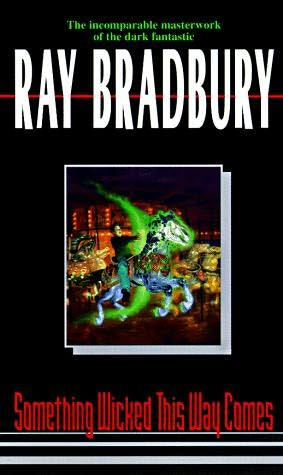
My inspiration comes from so many sources that it's really hard to narrow it down to any particular books, but just off the top of my head, Something Wicked This Way Comes by Ray Bradbury (Simon & Schuster, 1962) stands out. I like the idea that you don't have to go somewhere else to experience fantasy, that there's weird stuff going on all around us, maybe out in the open, maybe in the shadows, and Bradbury often takes that approach.


Probably, though, the more immediately visible influences on my work are comic books and cheesy '70s and '80s Saturday morning cartoons.

How have you approached the task of promoting your debut book? What online or real-space efforts are you making? Where did you get your ideas? To whom did you turn for support? Are you enjoying the process, or does it feel like a chore? What advice do you have on this front for your fellow debut authors and for those in the years to come?

I'm lucky in that my local indie bookstore, Mysterious Galaxy, has been incredibly supportive. They've had me to the store twice for signings, and they've gotten me on panels at Comic-Con, and they set up my first school visit.

I'm a bit skeptical about the effectiveness of self-promotion, so my approach is just to do things that I enjoy. Answering interview questions is fun. And I like meeting readers face-to-face. So even if turns out that making appearances doesn't have any real measurable impact on my sales, at least I've gotten to meet people who've read my book or might potentially read my book, and that's it's own reward.

Cynsational Notes

Kirkus Reviews cheers, "Drawing together a memorable supporting cast that ranges from a half-human Atlantean princess to a genial shark-man ('Howdy-do. Swim with us to shore or we’ll eat your legs'), van Eekhout chivvies the plot along at a lively pace to a hold-your-breath climax and a deftly choreographed resolution."

School Library Journal cheers, "Van Eekhout carefully balances his tongue in his cheek with some really creepy situations, and the result is a humorous fantasy that will rush over young readers like a tidal wave."

Wednesday, December 29, 2010

New Voice: Ilsa J. Bick on Draw the Dark

Ilsa J. Bick is the first-time author of Draw the Dark (Carolrhoda Lab; 2010). From the promotional copy:

There are things the people of Winter, Wisconsin, would rather forget. The year the Nazis came to town, for one. That fire, for another. But what they'd really like to forget is Christian Cage.

Seventeen-year-old Christian's parents disappeared when he was a little boy. Ever since, he's drawn obsessively: his mother's face...her eyes...and what he calls "the sideways place," where he says his parents are trapped. Christian figures if he can just see through his mother's eyes, maybe he can get there somehow and save them.

But Christian also draws other things. Ugly things. Evil things. Dark things. Things like other people's fears and nightmares. Their pasts. Their destiny.

And some things the people of Winter would rather forget—like murder.

But Winter won't be able to forget the truth, no matter how hard it tries. Not as long as Christian draws the dark...


How did you approach the research for your story? What resources did you turn to? What roadblocks did you encounter? How did you overcome them? What was your greatest coup, and how did it inform your manuscript?

I’m going to turn this question around a bit because I think that the research process for any story is reflexive and reflective of history (personal and otherwise) and imagination.

As a child psychiatrist, I’ve always been interested in the sideways place in people’s minds: that hole down cellar where darkness lives. So, for me, researching a story means digging deep, personally and otherwise.

So, some things you need to know:

a) I’m Jewish and the daughter of a Holocaust survivor;

b) I live in rural Wisconsin about a stone’s throw away from an old Hebrew cemetery—which is weird because we’re the only Jewish family in town;

c) A German PW camp once stood about four miles from my house, and was only one of thirty-eight such camps in the state;

d) I think all art tells a story.

A somewhat longer version:

Being Jewish and a survivor’s daughter, I’ve always felt the Holocaust as a kind of background music. Couple that with my move from the East Coast to Wisconsin almost a decade ago—to a place where we are, literally, the only Jews in town. Virtually no one in my village has ever met a Jew.

I remember the first time this older guy found out I was Jewish. First thing out of his mouth: "Hey, I heard Jewish people get buried standing up."

I’m not making this up. To put this in perspective, there used to be about a thousand Jews and several synagogues as late as the 1950s--so many Jews, they called this area, “Little Jerusalem."

But . . . wait a minute. There’s that Hebrew Cemetery just spitting distance from my house. So what’s with that?

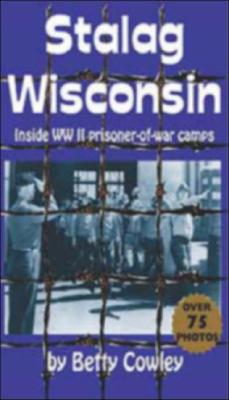
So I got curious and unearthed some interesting stuff, which led me a fabulous book, Stalag Wisconsin: Inside WW II Prisoner-of-War Camps by Betty Cowley (Badger Books, 2002). From Ms. Cowley’s work, I learned that prior to 1942 England held several thousand German prisoners of war but became increasingly nervous that Hitler was going to destroy England from the inside-out by air-dropping weapons to all those prisoners. So England asked the U.S. to take the PWs off their hands.

The first PWs started arriving here in 1942. Wisconsin’s Camp McCoy was one of the first Army base camps where captured Germans (and Italians and Japanese) were processed before moving along to other smaller, rural branch camps to ease manpower shortages on farms and in factories.

At its peak, the number of German PWs in the U.S. was about a half-million men. In many towns, especially in the heavily Germanic Midwest, camp officials were deluged with requests from U.S. citizens about German relatives.

Cowley’s book is chock-full of stories about things like German PWs knocking on relatives’ doors or those of German-Americans, only to discover a cousin or uncle or brother in a nearby PW camp.

After the war, many German PWs came back to the U.S.—to these communities—to live.

All that history got me thinking: what would it be like to be Jewish and to live here at that particular time? Here are Germans PWs, soldiers who’ve pretty much wanted to wipe you out, and now they’re just down the road. Your neighbors aren’t unhappy; in fact, they’re thrilled because some of these PWs are relatives or friends.

Think about that.

That’s where my protagonist, Christian Cage, enters: at the intersection of history and imagination and into a story I wanted to tell about darkness, secrets and guilt. (Christian’s name says it all, don’t you think?)

Christian tells his personal story to himself by painting his questions. Sometimes, his darkness freaks him out, but he keeps going and, personally, I think that takes guts. No matter how frightening, I think the journey through the darkness is worth it.

Call the reward insight; call it understanding. Or hope.

How did you go about identifying your editor?

Actually, my editor identified me!

I came up with the idea for this book at a writer’s workshop devoted to crafting queries and synopses. When I got home, I shot out my query and synopsis to a couple editors whom I’d researched pretty heavily in terms of what their houses were putting out and what their personal tastes appeared to be.

One answered immediately and wanted to see the book—which was kind of a trip because I hadn’t yet written the darned thing! So I typed my fingers off for about eight weeks and sent off the resulting book, originally titled "Stalag Winter."

And then I waited. And waited. And waited. And . . .

Well, you know the drill. After about five months of waiting, I contacted her again, only discover that she’d since quit her job.

At around the same time, I stumbled on the Amazon Breakthrough Novel Award contest and figured, fine, I’ll submit "Stalag Winter." There was no YA category that year, and so I submitted under "mystery," thinking my chances were slim to none.

I mean: a YA paranormal mystery? Hellooo . . .

As it happened, I made it to the semi-finals: the final hundred out of over five thousand entries. So I was pretty stoked; by then, other people had passed on "Stalag Winter," but that was fine. I had another book ready to make the rounds anyway; I figured that I’d mention "Stalag Winter" and the ABNA in the queries. Couldn’t hurt.

I sent out five queries—for a completely different book—on a Sunday afternoon.

By Monday morning, I had five replies, asking for the manuscript. On Wednesday, my fantabulous Carolrhoda Lab editor, Andrew Karre (interview), popped into my email, asking if we could talk. (Uh . . . that would be yes.)

We talked on Friday; Andrew wanted the book; it was kismet.

Andrew is the best kind of editor: one who’s boundlessly energetic, enthusiastic and eager to get under the book’s hood—not to yank out the distributor cap but figure out how the book works and how to make it work better. Above all, Andrew is interested in the writer. He wants to know what makes a writer tick. My kind of guy.

Mind you, though, his was a call for "Sin-Eater," not the book that became Draw the Dark. That book was still in the running for the ABNA. Andrew asked to see every YA I’d written, so I also shot him "Stalag Winter"/Draw The Dark.

Well, he completely flipped and wanted Draw The Dark, too.

All I had to do was lose the contest.

I did, but honestly, I won, big time. At this point, Draw The Dark is the first of three books Carolrhoda will be putting out; the others are Sin-Eater and Sweet.

I can say, with complete honesty, that I really look forward to working with Andrew on all these projects and many more.

Friday, December 24, 2010

Happy Holidays...


from My House to Yours!

Thursday, December 23, 2010

Cat Calls E-Book by Cynthia Leitich Smith Now Available for Free

Cat Calls by Cynthia Leitich Smith (Candlewick, 2010) is now available for free as an e-book from Amazon.com!

Cat Calls is set in the Tantalize series universe and features entirely new characters. Here's a peek:

Tiffany's grandma sees something wild in her future -- but is Tiffany prepared for the powerful shape it will take?

I’m what people call “a late bloomer.”

This May, not long after my sixteenth birthday, I finally started my period for the first time and shifted from blah to bombshell overnight.

For me, it was a relief.

My mom, on the other hand, had a full-scale panic attack. Before you could say “Xanax,” she packed me up and shipped me off to my grandmother, who at the time was predicting the future in Missouri off I-35.


Cynsational Notes

Tiff is claws-down the sassiest point-of-view character I've ever written, and this story radiates "animal" in a fierce, sexy, mind-bending kind of way.

Amazon.com tends to be the first online retailer to roll out new e-releases, but as the book becomes available at other outlets, I'll update you on that information. If you want it now, though, you should order here.

"Cat Calls" was originally published as a short story in Sideshow: Ten Original Tales of Freaks, Illusionists and Other Matters Odd and Magical, edited by Deborah Noyes (Candlewick, 2009).

It also will be featured at the back of the Blessed (Candlewick, Jan. 25, 2011) e-book.

Spooky News, Cat Calls (free e-book) Release, Blessed Giveaway

2010 Trends and Industry Predictions by Jennifer Lynn Barnes and Ally Carter from Jennifer. Peek: "High concept historical fiction might be poised to make a move if, like paranormal, it has a mix of commercial elements. From crime-fighting flappers to Austenian assassins, historical might be a very interesting place to be in 2011 and beyond."

I Got the Call! Um, Now What? by Jennifer Laughran from Jennifer Represents. Peek: "Let the other agents who are considering your work know that you have an offer. Give them a few days or a week to read and respond."

Should You Post Your Writing Online? by Mary Kole from Kidlit.com. Peek: "Even though most editors and agents don’t like to work with previously published material, whether posted online or self-published, a short sample on your blog may not be enough to put them off your project. (Careful, though, as individual policies here do vary greatly.)"

Listen. Listen. by Jane Lebak from QueryTracker.net Blog. Peek: "For Christmas or whatever holiday you celebrate, give yourself the gift of believing you have something important to say."

Triaging Rejection Pain by Laurie Halse Anderson from The Debutante Ball. Peek: "Maybe you say prayers, or light candles, or visit shrines like Mark Twain’s house and leave small offerings of cigars and pots of ink. And then you wait."

Interview with Robin Wasserman by Debbi Michiko Florence from One Writer's Journey. Peek: "...you just have to keep reminding yourself that you have no control over how a book is received by the world. The only part of the publishing process that writers actually have control over is the writing. And I've found that focusing on that makes for a much saner Robin."

Dealing with Rejection by Mary Kole from Kidlit.com. Peek: "...cast off your unsuccessful projects and work on something else. Focus on your craft. Plod along toward mastery."

A Case for Villains by "No villain=no conflict=no plot=no point."

Developing Your Writer's Intuition by Angela Ackerman from Adventures in Children's Publishing. Peek: "Trust your intuition and if you think there's a problem, get some fresh eyes and opinions. You only get one chance to impress, so send out your best."

Bibliography of 2011 Children's-YA Books By/About People of Color from Color Online.

Mini Writing Conference -- 6 1/2 Lists of Advice from Editors, Agents, Authors and a Really Cool Kid from Donna Gephart at Wild About Words.

SCBWI Team Blog Interview with Art Directory Lucy Ruth Cummins by Jaime from CocoaStomp. Peek: "Often if I'm totally 'in the zone' working on a book, I'll have a hard time checking out the moment the whistle blows. Really flowing with a project is such a wonderful feeling, and squandering that flow is something I try never to do."

Writers Links: Promotion: a round-up of ideas, tips, and resources from Children's & YA Lit Resources.

New Blessed Interview & Giveaway

Chatting with Cynthia Leitich Smith & Blessed ARC Giveaway by Chris Eboch from The Spectacle. The full scoop on my YA Gothic fantasy series, how Stephen King scared me, the challenges of writing speculative fiction, connecting with a publisher, reaching readers, the sci-fi/fantasy world I'd want to live in, my favorite actors, and my feelings about Aquaman.

Comment for a chance to win an ARC of Blessed (Candlewick, Jan. 25, 2011)!

See also the Blessed media kit (PDF). See also Chris's blog Write Like a Pro! A Free Online Writing Workshop.

Cat Calls: Free E-book Release

Cat Calls by Cynthia Leitich Smith (Candlewick, 2010) is now available for free as an e-book from Amazon.com!

As additional online retailers make the e-book available, I'll update you with that information.

"Cat Calls" was originally published as a short story in Sideshow: Ten Original Tales of Freaks, Illusionists and Other Matters Odd and Magical, edited by Deborah Noyes (Candlewick, 2009).

More Personally

Link of the Week: One of the Many Reasons I Love My Agent, Ginger Knowlton by Debbie Ridpath Ohi from Inkygirl.com: Daily Diversions for Writers. Note: Ginger is my agent too.

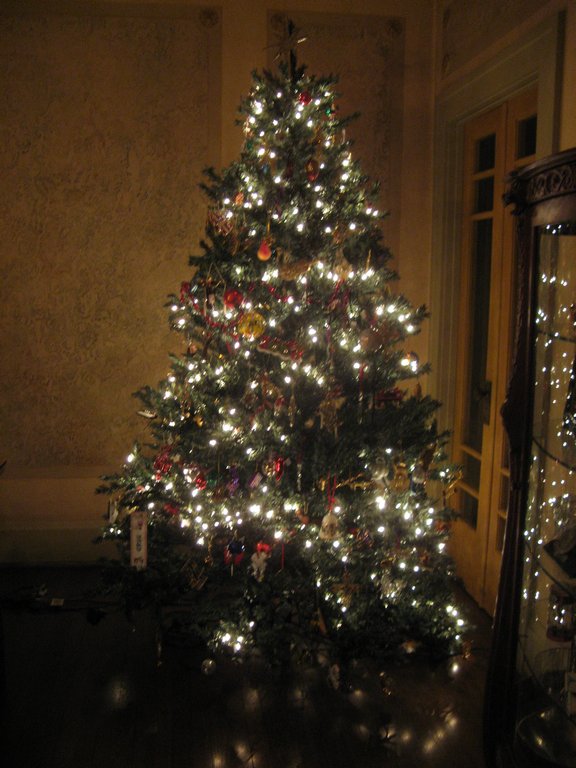
I'm spending this holiday in deadline mode, but here's a peek at the tree.

And here's my before-Christmas present from Santa Claus AKA my Candlewick editor, Deborah Wayshak--my first author's copy of Blessed (Candlewick, Jan. 25, 2011).

Giveaway Reminder

Enter to win a illustrator-autographed copy of Is Your Buffalo Ready for Kindergarten? by Audrey Vernick, illustrated by Daniel Jennewein (Balzer+Bray/HarperCollins, 2011)! The book will include a customized drawing--the winner can pick the buffalo's pose!

To enter, email me (scroll and click envelope) and type "Buffalo" in the subject line. Facebook, JacketFlap, MySpace, and Twitter readers are welcome to just privately message or comment me with the name in the header/post; I'll write you for contact information, if you win. Deadline: Dec. 31. Sponsored by the illustrator; world-wide entries.

Spooky Events

Jessica Lee Anderson will speak on seven things she's learned through her publishing journey...using songs at the Austin SCBWI monthly meeting at 11 a.m. Jan. 15 at BookPeople in Austin. Read an interview with Jessica and P.J. Hoover.

Save the Date! Joint Launch Party: Blessed by Cynthia Leitich Smith (Candlewick) and Night School by Mari Mancusi (Berkley) book party and signing at 2 p.m. Jan. 29 at BookPeople in Austin. Read a guest post by Mari on Kids Don't Read Like They Used To...And That's a Good Thing (on connecting books to technology). Don't miss the Night School blog tour!

A Cacophony of Conference Contests from Austin SCBWI in conjunction with Books, Boots, and Buckskin, the chapter's regional conference on Feb. 18 and Feb. 19. Note: includes drawings for saved seats and both author/manuscript and illustrator/portfolio critiques.

Tuesday, December 21, 2010

New Voice: Shaun David Hutchinson on The Deathday Letter

Shaun David Hutchinson is the first-time author of The Deathday Letter (Simon Pulse, 2010). From the promotional copy:

Carpe Mortediem!

Ollie can’t be bothered to care about anything but food, girls, and games until he gets his Deathday Letter and learns he’s going to die in twenty-four hours. Bummer.

Ollie does what he does best: nothing.

Then his best friend convinces him to live a little, and go after Ronnie, the girl who recently trampled his about-to-expire heart. Ollie turns to carloads of pudding and over-the-top declarations, but even playing the death card doesn’t work. All he wants is to set things right with the girl of his dreams.

It’s now or never....


Are you a plotter or a plunger? Do you outline first, write to explore first, or engage some combination of the two? Then where do you go from there? What about this approach appeals to you? What advice do you have for beginning writers struggling with plot?

I'll tell you a secret: I suck at plot. Maybe that's not the sort of thing a writer should admit. It's like an accountant admitting that he sucks at math. But it's the truth. Plots are my weak point.

I don't think writers are either plotters or plungers. Instead I think we all fall on a spectrum somewhere. We all begin in the same place, groping about in the dark with naught but a lamp to guide our way. The only real difference is that some people have a much brighter light. Some writers can see a story from beginning to end before they write a single word, whereas some writers' lights are barely bright enough to illuminate their shoes.

My light is pretty dim. Generally, when an idea comes to me, I know two things: the beginning and the end. For instance, with The Deathday Letter, I began with Ollie. I knew his story began in bed on the last day of his life, and I knew that it ended 24 hours later with his death.

The rest of the story had to be uncovered one slow step at a time.

For me, it's like exploring. Like a Chose Your Own Adventure book. Sometimes I take a left when I should have taken a right and I end up having to delete huge chunks of work, but that's the fun of it for me. Not knowing what's coming next is how I stay engaged for so long.

I do have a notebook where I'll write scene ideas, but that doesn't necessarily mean I'll ever use them. I let every scene inform the ones that come after. I find that if I outline first, it traps me, boxes me in and takes away my ability to explore. If something unexpected happens, I like having the freedom to follow that new event to its logical conclusion.

The downside to this is that, if you're like me and suck at plotting, you can end up with a story that doesn't quite work. One that you have to heavily revise. This is where the plotters with their bright flashlights have the advantage. They have the ability to see those inconsistencies prior to writing the first draft. But hey, that's what revising is for.

After my first draft, I become an outlining fiend. I have this crazy spreadsheet a friend gave me, that I use to break down every scene by character and location. It's crazy but allows me to get into the nuts and bolts of the story.

To beginning writers who are maybe struggling with these issues: listen to what works, ignore the rest. You heard me right. There are a thousand voices telling newbie writers how to do this and how to do that. Most of them are wrong...for you.

I've heard the amazing Hannah Moskowitz, author of Break (Simon Pulse, 2009), finishes a first draft in a week, writing mostly in front of the television. Most people will tell you she's nuts, but it works for her and she's pretty genius in my book.


So when it comes to plotting or plunging or going bat-poop crazy on some blank paper, I say flick on your flashlight, see how far you can see, and forge your own path through the dark.

If it works for you, then it's the right way to do it.

As a comedic writer, how do you decide what's funny? What advice do you have for those interested in either writing comedies or books with a substantial amount of humor in them?

There's a secret to being funny. Want to hear it?

Okay, here it is: don't try to be funny. That's it.

Go forth and make people laugh now.

Okay, seriously, I don't know anything about how to be funny. I don't actually consider myself a funny guy. Ask my brother, he'll tell you how lame I am. But I suppose that's not the answer anyone wants. So here's what I've learned.

First, you can't try to be funny. Every time I've ever written a joke, it's fallen flat. Jokes can't be forced, they have to come organically from a situation. For me, that's the biggest rule. Sure, you can do things to enhance a funny situation, but everyone can tell when you manufacture one.

The other thing you have to do is be prepared to to be humiliated. You can't be self-conscious if you're going to be funny.

What does that mean? It means that you better be able to handle the idea of your mom reading a book filled with crazy euphemisms for boy parts. It means going there. To that place that other writers won't go. It means being open and raw and honest even when it hurts.

One of the best examples of this, in my opinion, is Spanking Shakespeare by Jake Wizner (Random House, 2007). In titular character Shakespeare Shapiro, Wizner created a gut-crushingly honest teen that made me laugh harder than I'd laughed in just about forever. And that's because Wizner doesn't pull any punches.


This goes back to some great advice I learned from reading Stephen King's book, On Writing (Scribner, 2000): Be honest.


What Wizner gives us (and what you must also give, if you're going to write a comedy) is one hundred percent of your soul. You have to be willing to be honest with yourself and draw from your most humiliating moments, if you're going to make people laugh.

It's a painful but rewarding process.

The difference between those who write drama and those who write comedy is ugliness. Comedic writers embrace the ugly in everything.

Kissing, for instance. Open up most dramatic books and you'll find the tentative first kiss between two lovers. It's beautiful and sweet and tender. It's magic. And it's also bull.

I don't know about you, but my first kiss was nothing like that.

Mine was in the parking lot of a grocery store. I was hot and my breath smelled like Doritos and she was wearing too much make up. I remember thinking that her tongue tasted like bologna and kind of made my skin crawl. The steam from our breath made my nose wet and it felt like snot. When we were done, I slipped a dollar into her Salvation Army bucket and went back into the grocery store to finish my shift.

Not the stuff dreams are made of. But possibly funny.

As a person who writes the funny, I embrace the ugliness of my first kiss. I milk it for its tragic awkwardness. And I'm not embarrassed to share it with you. If you want to write comedy, these are the things you have to do.

Also, you have to be prepared for people who won't think you're funny.

Humor is highly subjective. People might laugh at the story of my first kiss because they've had similar, cringe-inducing experiences. But maybe there's someone out there whose every kiss has been fairy-tale magic wrapped up in candy-cane bows. Without a similar experience to draw from, that person might read my story and simply think me a sad, sorry individual. But that's the risk you take.

I knew when I sold Deathday that the high proportion of boy-oriented jokes might be a turn-off to some female readers, but it was a risk worth taking, and if you want to be funny you'll have to take similar risks.

Comedy is like love: you can't force it. You just have to be open to it, ready for it, and prepared for total humiliation. I may not know anything about being funny, but I know a heck of a lot about being embarrassed.

Spooky Notes

Check out The Deathday Letter website, read chapter one (PDF), and learn more about Shaun from Simon & Schuster. Visit him at facebook and his tweet deck.

Friday, December 17, 2010

Spooky News & Giveaways

Enter today to win the Cynthia Leitich Smith Grand Prize Giveaway from Book Club as part of Book Club's 31 Days of Giveaways!

The prize is:

a signed Blessed (Candlewick, Jan. 2011) ARC;

Quincie's Chicago-themed road trip journal (lined for your own notes);

and a plush toy bat with purple ears and bow tie!

To enter, you'll need to surf to the immediately preceding link answer the following questions:

(1) In the 2003 movie "Elf," what are the four main food groups that elves stick to?

(2) What did I give you last Christmas, that the very next day, you gave it away? (Hint: The name of of the carol is in the question.)

(3) Rudolf the red nose reindeer was made fun of by the other reindeer until what happened?


Surf over to answer in the comments section of today's prize post at Crissi's Blog. The winner will be randomly selected from the correct answers and awarded within 24 hours.

Good luck, and happy holidays!

See also a Cynsations interview with Cristina Brandao on Book Club at facebook. Note: Book Club is currently 12,516 members strong.

More News & Giveaways

What Children's Publishers Are Doing in the Apps Space: Houses Are Testing, Experimenting by Rachel Deahl from Publishers Weekly. Peek: "Bloomsbury is creating its first app this season, based on Carrie Jones’s YA paranormal romance series Need. A spokesperson for the house said the planned release date for the app is December, to coincide with the publication of the third book in the series, Entice (2010)." Source: Alice Pope's SCBWI Blog.

Congratulations to Paul B. Janeczko on the success of The Dark Game: True Spy Stories (Candlewick, 2010)! From the promotional copy: "Ever since George Washington used them to help topple the British, spies and their networks have helped and hurt America at key moments in history." The Dark Game is a finalist for the YALSA Award for Excellence in Nonfiction for Young Adults and Booklist said: "With well-chosen subjects (including many women and African Americans who used their marginalized positions to gather information) and contagious enthusiasm for the spy world's 'tantalizing mysteries,' this makes a strong choice for both avid and reluctant readers alike."

Re-submissions and Re-querying: Yes or No? by Stina Lindenblatt from QueryTracker. Peek: "What should you do if you’ve queried an agent with sample pages, but by the time they’ve request the partial or full, you’ve made substantial changes to those pages?"

Figment Looks to Attract Young Writers from Publishers Weekly. Peek: "Founded by New Yorker staff writer Dana Goodyear and former New Yorker managing editor Jacob Lewis, Figment.com is an online writing community aimed at attracting a membership of young people, ranging from kids to teens and older, to post, share and comment on each other’s original writing. Launched this week...." Note: I've had the opportunity to visit with Jacob on a couple of occasions and have participated in a couple of pre-launch activities on the system.

Interview with Robin McKinley on Pegasus (Putnam, 2010) by Parker Peevyhouse from The Spectacle. Peek: "I did realise [sic] that something the size of pegasi either had hollow bones or some magic to allow them to fly at all, but that kind of explanation or confirmation tends to come later in the story-telling process."

What To Expect When You're...On Submission by Elizabeth Fama from Crowe's Nest. Peek: "When your agent tells you the names of the editors on your submission list, it’s a little like learning that you’re pregnant.'"

New Agent Alert: Brianne Mulligan of Movable Type Literary Group by Chuck Sambuchino from Guide to Literary Agent's Editor's Blog. Peek: seeking "high-concept YA and middle grade fiction."

Books, Boots & Buckskin: 2011 Austin Regional SCBWI Conference Contest from ARA Carmen Oliver from Following My Dreams. Prizes include saved front-row seats. Deadline: Feb. 1. Note: conference dates are Feb. 18 and Feb. 19 at St. Edward's University in Austin; see more information.

Cover Stories: Matched by Ally Condie from Melissa Walker. Peek: "The dress is beautiful and has significance to the story, as does the bubble/glass world and the color green." Peek: "Matched was just named #1 on the Winter 2010-2011 Kid's Indie Next List. "

Too Many Cooks - How Do You Handle Conflicting Critiques? by Mary Lindsey from QueryTracker. Peek: "First, as with all criticism, do not take it personally or you cannot objectively evaluate the input. Then, consider the source. How well do you know this person? What are his/her qualifications?"

2010 YA Books Central Reader's Choice Nominations from YABC. Peek: "This year, YABC is hosting our own Reader's Choice Awards for 2010! We'll be collecting your nominations until Sunday, Dec. 19. Then, on Monday the 20th, we'll open the voting for your favorites...." Note: picture book, middle grade, and YA author and book categories. Go nominate!

What Makes a Great First Page? by Alvina Ling from Blue Rose Girls. Peek: "I can definitely gauge how talented a writer is based on the first page. In fact, because authors know the first page is so important, they tend to spend a lot of time revising that first page (if they're smart!)."

GregLSBlog Favorites of 2010 from Greg Leitich Smith. Note: book pics from picture books through YA. Here's a peek (above) at his middle grade choices.

World Building Through Character by Anna Staniszewski from annastan. Peek: "Build as you go, allowing your characters to lead you."

Whether to Give Up on a Project by Jennifer R. Hubbard from writerjenn. Peek: "Sometimes the magic leaves a project. We don't get to the ending, or maybe we don't get to turn that early draft into the book it could be."

Where Do I Go From Here?: 3 Literary Agents, 3 Opinions: a one-day workshop from Andrea Cascardi of Transatlantic Literary Agency, Anna Olswanger of Liza Dawson Associates, and Ann Tobias of A Literary Agency for Children's Books from 9:30 a.m. to 4 p.m. March 6 at The New York Open Center, 22 East 30th Street, New York NY 10016. (This event is not affiliated with The New York Open Center.) Fee: $295.00 to February 6, $325.00 thereafter (lunch included). Group size is limited; previous workshops have sold out.

Lindsey Scheibe: new blog from an Austin-based YA writer, represented by Mandy Hubbard of D4E0 Literary Agency. Peek: "For now, I hope to put up three blogs each week. One personal. One writing focused. One highlighting writing related blogs or sites that I admire and find enlightening." More about Lindsey: "She volunteered with Makarios the past two years, as well as visited their missionary school in the Dominican Republic where they service Haitian and Dominican children."

Do What You Do Well by Brian Yansky from Brian's Blog - Writer Talk. Peek: "The truth was maybe one or two could write beautiful prose (and this was in a large group of talented writers). Most just didn’t have that gift. But instead of struggling to develop what gifts they did have they got caught up on language because that was what all the teachers praised most."

Cynsational Screening Room

Check out the book trailer for Shadow Hills by Anastasia Hopcus (Egmont, 2010). Anna lives in Austin, Texas; and Shadow Hills is her debut novel.


Austin Scene

Austin SCBWI members gathered last week at Opal Divine's Marina for fajitas and holiday cheer.


Author-illustrator Don Tate with illustrator Erik Kuntz.

Authors Jessica Lee Anderson and Margo Rabb.

More Personally

I'm honored to announce that my essay, "Isolation," will appear in Dear Bully: 70 Authors Tell Their Stories, edited by Megan Kelley Hall and Carrie Jones (HarperTeen, fall 2011). A percentage of the book's proceeds will go to a national anti-bullying program. See also Anthology to Compile Authors' Personal Stories About Bullying by Sally Lodge from Publishers Weekly.

Cynthia Leitich Smith: Children's Book Author Interview by Aaron Mead from Children's Books and Reviews. Note: I talk about my writing, life on line, and offer advice to beginners. Peek: "A picture book is like a puzzle, getting just the right combination of words and elements. A novel is more like an endurance trek, uphill in the rain, carrying a rhino on your back. I love both."

Great Gifts for the Paranormal Romantic by Madeline from BookKids at BookPeople in Austin. Suggestions include Tantalize (Candlewick, 2007, 2008) and Eternal (Candlewick, 2009, 2010) and more by other nifty YA fantasy authors.

Thanks also to Katiebuggy129 for this writing project video on Eternal! Cynsational readers--I love the songs and comments! Great voice and humor! Wow!


And the Christmas train is chugging around the kitchen table.

Link of the Week: Bags get bookish: 'intellectual' clutch bags by Olympia Le-Tan from Fashion Telegraph. Source: April Henry.

Please note that I'm in the deadline cave and restrain from sending any non-critical messages.

Spooky Events

Save the Date! Joint Launch Party: Blessed by Cynthia Leitich Smith (Candlewick) and Night School by Mari Mancusi (Berkley) book party and signing at 2 p.m. Jan. 29 at BookPeople in Austin. Read a guest post by Mari on Kids Don't Read Like They Used To...And That's a Good Thing (on connecting books to technology). Don't miss the Night School blog tour!